A medical assessment can feel more uncertain than a training session. You cannot prepare for it by choosing a target weight or improving an interview answer, and an online account of someone else’s outcome may not apply to you.
The confirmed basis is individual assessment: Occupational physician assesses complete medical history individually; disclose previous and current conditions. source review overdue (review due 2026-10-08); confirm the current candidate information pack. The useful preparation is accurate disclosure, organised records and following clinical instructions—not trying to guess which diagnosis automatically passes or fails.
This guide covers current published FRNSW career guidance. It does not reproduce a complete medical standard or extend career requirements to retained/on-call recruitment.
Separate PAT clearance from occupational medical assessment
There are different questions involved in being cleared to attend a physical assessment and being assessed for employment. Keep the paperwork and decisions separate.
For PAT attendance: A doctor’s medical clearance must reach recruitment by the specified deadline before PAT attendance. source review overdue (review due 2026-10-07); confirm the current candidate information pack.
For employment medical assessment: Occupational physician assesses complete medical history individually; disclose previous and current conditions. source review overdue (review due 2026-10-08); confirm the current candidate information pack.
A document accepted for the physical assessment is not evidence that the occupational medical decision has already been made. Likewise, a good gym session or successful physical preparation does not substitute for clinical assessment.
FirePrep recommends keeping a simple checklist of each requested form, who must complete it, where it must be sent and the actual deadline in your candidate instructions. This avoids relying on a vague memory that you have “already done the medical”.
What screening is confirmed
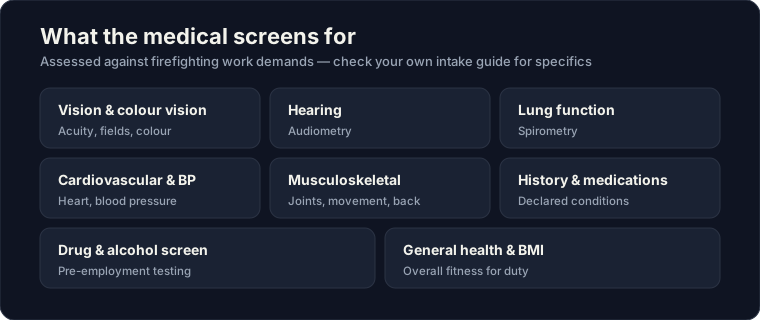
Medical screening includes pathology, ECG and spirometry; applicants bear assessment costs. source review overdue (review due 2026-10-08); confirm the current candidate information pack.
Use that description to prepare questions, not to reconstruct an exhaustive test list from other services’ guides. FRNSW-specific numeric vision, hearing, blood-pressure and body-mass thresholds are not confirmed here. Nor can this guide establish a universal decision for a particular condition.
If you are worried about a test, ask what it involves and whether preparation or relevant records are needed. Do not order a collection of private tests on the assumption that each is compulsory, or assume an existing test will be accepted without checking.
An ECG records electrical activity of the heart; spirometry measures aspects of breathing function. Those general descriptions help explain the terminology, but interpretation belongs to the clinician. An isolated result is not something this article or a preparation coach can translate into an employment decision.
Organise your history before the appointment
FirePrep recommends preparing an accurate account of previous and current conditions, treatment, procedures, injuries and medications. Include information requested on the actual form rather than trying to anticipate what an assessor “wants to hear”.
Useful organisational steps include:
- Check dates against records where possible rather than guessing.
- List current medicines and supplements accurately.
- Note the clinicians involved in ongoing care.
- Locate relevant specialist or rehabilitation reports you already hold.
- Ask whether additional information is needed before paying to obtain it.
- Keep copies of submitted forms and instructions securely.
The point is clarity, not building a case that conceals uncertainty. If you cannot remember a detail, say so and ask how to clarify it.
What to do about a concern
If you have symptoms, a health condition or an old injury that worries you, discuss it with your treating clinician. Ask about your current health and safe exercise, and request guidance about records that may help the occupational assessment.
Avoid both extremes: assuming a condition rules you out, and assuming it cannot matter because you train hard. The supported individual-assessment approach does not justify either conclusion.
Do not stop prescribed medication, change treatment, deliberately dehydrate or attempt to manipulate a test result. Follow the appointment’s preparation instructions and seek clinical advice if they conflict with your usual care. If you become unwell near the appointment, contact the assessment provider rather than deciding alone to push through or miss it.
Preparation is not a guarantee of clearance
Sleep, sensible exercise and recovery are worthwhile for general wellbeing. They are not a way to guarantee a medical outcome, and an adverse result should not be portrayed as proof that someone failed to look after themselves.
The PAT preparation guide can help you plan physical work, but medical decisions require different expertise. If training is worsening pain or symptoms, pause the relevant activity and obtain individual advice rather than treating discomfort as a recruitment obstacle to hide.
Budgeting also matters. Use the confirmed screening-and-cost fact above when planning expenses, then check the actual appointment arrangements. Do not assume costs are identical across services or that a quoted initial fee includes every possible follow-up.
Keep the wider application organised
Medical paperwork is not the only administrative work to track. National police, driving and conduct checks; MR licensing required before course placement. source review overdue (review due 2026-10-08); confirm the current candidate information pack. Provide managers from the past three years where possible; volunteer/self-employed alternatives require recruitment guidance. source review overdue (review due 2026-10-08); confirm the current candidate information pack.
Maintain separate records for medical, licensing and reference requests so that completing one does not obscure another. The full recruitment guide brings those obligations together, and the recruit-school guide discusses practical planning beyond selection.
The FirePrep readiness check can support preparation planning. It cannot diagnose a condition, interpret your clinical results or issue occupational medical clearance. For those questions, use the assessment provider, recruitment team and your treating clinician.